| |
| Thursday 15 October 2026 |
| LONDON'S LOST DEPARTMENT STORES |
| Tessa Boase |
 |
London’s sumptuous Victorian and Edwardian department stores changed the capital – and changed its women. Shoppers of every rank were lavishly wooed, seduced and often undone by the temptations laid out before them in these new ‘cathedrals of desire’.
About the lecturer: Tessa Boase is a freelance journalist, author, lecturer and campaigner with an interest in uncovering the stories of invisible women from the 19th and early 20th-centuries – revealing how they drove industry, propped up society and influenced politics. She’s the author of three books of social history: The Housekeeper’s Tale: The Women Who Really Ran the English Country House (2014); Etta Lemon: The Woman Who Saved the Birds (first published as Mrs Pankhurst’s Purple Feather in 2018), and London’s Lost Department Stores: A Vanished World of Dazzle and Dreams (2022). Since uncovering the feminist origins of the RSPB, Tessa has been campaigning for public recognition of its female founders with plaques, portraits and a statue. |
|
| Wednesday 18 November 2026 |
| AGATHA CHRISTIE AND DOROTHY L. SAYERS IN LONDON |
| Richard Burnip |
 |
How the two great Queens of Crime brought the metropolis to life in the 1920s and 30s and how Hercule Poirot and Lord Peter Wimsey found a home there. Both authors chronicled the rapidly-changing London of the 1920s and ‘30s, writing in the same genre but in radically different ways.
About the lecturer: Richard Burnip took a BA Hons in English Language and Literature from the University of Manchester, followed by an acting diploma at the Birmingham School of Speech and Drama. He combines acting, writing and lecturing. He has lectured in many venues including the National Army Museum and the Museum of London, and is currently presenting a variety of virtual lectures online. Richard has contributed to, among others, The Journal of Popular Film and Television, The Sherlock Holmes Journal, and the P G Wodehouse journal Wooster Sauce. A specialist in voice work, he has narrated numerous documentaries and 150 audiobooks Image: Wikimedia creative commons public domain |
|
| Thursday 17 December 2026 |
| A Christmas Special: MICHAEL PRAETORIOUS |
| Patrick Craig |
 |
Michael Praetorius’s music was celebrated again in his anniversary year of 2021, and thanks to a wonderful 1994 disc from the Gabrieli Consort, his music for Christmas has become his most loved calling card. Paul McCreesh describes it as “Lutheran music at its most beguiling” as well as “community music at its best’, allowing amateur singers, congregational input, children’s choirs and local instrumentalists to join in. Through his settings of the great carols Von Himmel hoch, In dulci jubilo, Puer natus in Bethlehem, Quem pastores laudavere and Wie scho¨n leuchtet der Morgenstern, we will be able to travel through the entire Advent, Christmas and Epiphany stories, whilst exploring contemporary art and history.
About the lecturer: Patrick Craig is a Vicar Choral at St Paul’s Cathedral. For twenty years he combined this with an international career singing over a thousand concerts with the world-renowned early music consort The Tallis Scholars. He also sings with the award-winning group The Cardinall’s Musick. He founded and conducts this country’s leading all-female professional choir, Aurora Nova. He has conducted concerts for the BBC Proms, the Brighton, Lichfield and Aldeburgh Festivals, and with the City of London Sinfonia. As a Cambridge history graduate with a lifelong interest in the arts, he has gone on to lead choral workshops for amateur singers across the world, where he places music in its historical and cultural context. He regularly lectures for the St Paul’s Adult Education programme and for John Hall’s Venice Courses, which have allowed him to incorporate his interests in theology, art and poetry. In 2020, when his singing and conducting work disappeared overnight as a result of the Covid pandemic, Patrick poured all his experience into online presentations which have raised vital funds for the Help Musicians Charity |
|
| Thursday 21 January 2027 |
| The History of the City of London as told through its stained glass |
| Anna Warrillow |
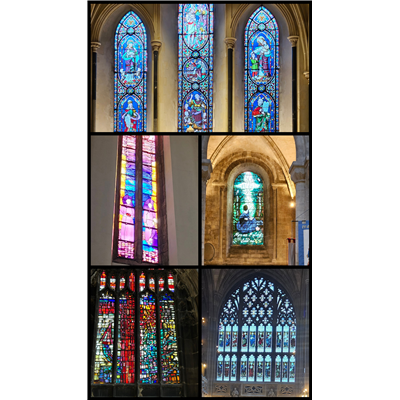 |
London's history is fascinating and full of colourful characters, from William Shakespeare to Dick Whittington's cat! In this lecture we gallop through almost 2000 years of London's history brilliantly illustrated through the stained glass windows found in the city churches and livery halls. Often overlooked, these provide a unique insight into the milestones which have made up London's story. As well as 18th, 19th century and 20th century windows we look at some of the most up-to-date and contemporary glass makers. Anna will also provide a list of windows and where they can be found so you can undertake a self-guided walk if you wish!
The Lecturer: Anna Warrillow Studied for a BA in History of Art & Italian at the University of Sussex and did an MA in Renaissance Decorative Arts & Design at the Royal College of Art. Worked for 6 years as a curator in the Sculpture Department at the Victoria & Albert Museum as well as in smaller collections such as the Henry Moore Family Trust. As well as guiding, she is a lecturer at Richmond The American International University in London where she teachs undergraduates The History of London. Graduated as a Blue Badge Guide early in 2013. Since then has been conducting bespoke private tours for discerning visitors to London. |
|
| Thursday 18 February 2027 |
| The White Mantle of Winter |
| Julian Halsby |
 |
The Impressionist Movement of the late 19th and early 20th centuries produced some of the finest snow paintings in the history of art. Although the 17th century Dutch masters had painted snow, it was not a common subject amongst landscape painters until its rediscovery by the Impressionists. Claude Monet, Camille Pissarro and Alfred Sisley all painted snow, often standing for hours in the open air to capture the subtleties of light and colour produced by a recent snow fall. They were helped by a series of cold winters in Europe in 1879-1880 and 1890-1891, but they were by no means the only Impressionists who painted snow and ice. Image: First snow at Veneaux-Nadon 1878 Alfred Sisley National Gallery of Art open access
The Lecturer: Julian Halsby Studied History of Art at Cambridge. Formerly Senior Lecturer and Head of Department at Croydon College of Art. Publications include Venice - the Artist's Vision (1990, 1995), The Art of Diana Armfield RA (1995), Dictionary of Scottish Painters (1990, 1998, 2001, 4th edition 2010), A Hand to Obey the Demon's Eye (2000), Scottish Watercolours 1740-1940 (1986, 1991), A Private View - David Wolfers and the New Grafton Gallery (2002). Interviews artists for the Artist Magazine and is a member of The Critics Circle. A practising artist, he was elected to the Royal Society of British Artists in 1994 and was Keeper from 2010 to 2021. |
|
| Thursday 18 March 2027 |
| The Genius of Antonio Stradivari |
| Tony Faber |
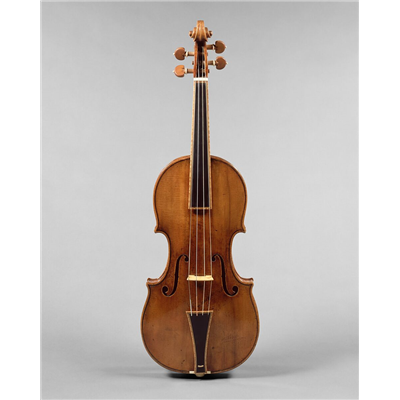 |
Explores the central mystery embodied by the inimitability of Stradivari's violins by following some of his instruments from his workshop to the present day. Two hundred and fifty years after Antonio Stradivari’s death, his violins and cellos remain the most highly prized instruments in the world. Loved by great musicians and capable of fetching fabulous sums when sold, their tone and beauty are legendary. Every subsequent violin-maker has tried to match them. Not one has succeeded. How can that be?
Lecturer: Tony Faber Toby is an experienced lecturer and public speaker who has been accredited by The Arts Society since 2012. His career began with Natural Sciences at Cambridge and has been through investment banking, management consulting and five years as managing director of the publishing company founded by his grandfather, Faber and Faber, where he remains on the board. He is also non-executive Chairman of its sister company, Faber Music and a director of Liverpool University Press. Toby has written three narrative histories: Stradivarius – Five Violins, One Cello and a Genius; Faberge’s Eggs; and Faber & Faber – The Untold Story, as well as a novel, Close to the Edge. Of these, only the obvious one is published by the family firm. Image: Stradivarius voilin. The Met, Public domain |
|
| Thursday 15 April 2027 |
| THE CONSERVATION OF PAINTINGS |
| Julia Korner |
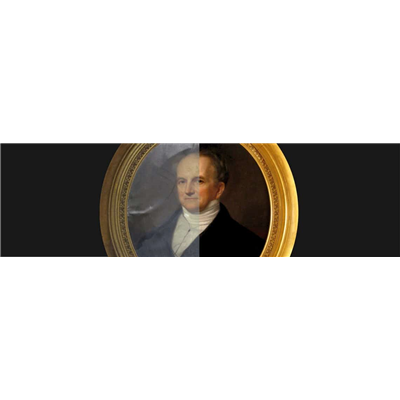 |
The talk comprises a practical, step-by-step guide to the conservation of paintings through the ages. It starts with a brief history of the preparation of panels and canvases and illustrates the different approaches and techniques involved in their conservation. Various ‘before’, ‘during’ and ‘after’ photographs show the pictures undergoing conservation and the processes involved. The frames housing various paintings undergoing conservation are discussed with illustrations showing the various stages involved in their conservation.
About the Lecturer: Julia Korner Julia Korner is a specialist and lecturer in fine art conservation and the restoration of paintings, sculptures and frames. She is also a valuer, passionate collector, advisor and curator of paintings and works of art. Julia trained in art history and conservation, Cambridge, England. Then, for twenty years, she worked for Christie's as a paintings’ specialist, building extensive knowledge of Old Masters, and of British, European and American paintings from the 1700s onwards. She set up Christie's Maritime Department in 1986, followed by the Frame sales, the Aeronautical, Exploration & Travel and the Polar sales. Julia was elected Huntington Fellow of the Mariners' Museum, Newport News, Virginia, USA, in 1997. A seven-year commitment there saw her catalogue this collection and that of its sister organisation, the South Street Seaport Museum, New York. Julia has worked independently in her own studio in West London since 1997. Here, she and her small team give specialist conservation work personal and expert attention through restoration, scientific analysis and research. Damaged paintings, polychrome statues, over-mantles, traditional gold leaf & gesso frames, along with unusual and exquisite handmade cabinets all emerge transformed by the conservation work, or created from scratch, under her expertise, knowledge and care. Julia acts as an advisor, valuer and exhibition curator for public and private collections, in the UK and abroad. She also gives illustrated talks and lectures. She is an elected member of The British Antique Dealers' Association, The British Association of Paintings Conservator Restorers, The Worshipful Company of Arts Scholars, and The International Institute for Conservation. In addition to her role as a lecturer for The Arts Society, Julia also lectures for Sotheby’s Institute, Christie’s and Fine Art Societies at home and abroad. Image: George Peter Alexander Healy, Public domain, via Wikimedia Commons Image: George Peter Alexander Healy, Public domain, via Wikimedia Commons |
|
| Thursday 20 May 2027 |
| PRINCESS LOUISE - An aesthetic sculptor locked away in the archives |
| Lucinda Hawksley |
 |
When researching my biographies of Lizzie Siddal and Kate Perugini, I kept coming across a mysterious princess, attending studio parties, helping fellow artists in times of need, and being linked with several scandals. I was amazed to discover Princess Louise was a daughter of Queen Victoria and Prince Albert, and a well-respected sculptor. Her life and legacy has been locked away in the Royal Archives ever since her death in 1939, but her work was stunning, and her life fascinating. Researching her biography was like being a detective, so I titled my book The Mystery of Princess Louise.
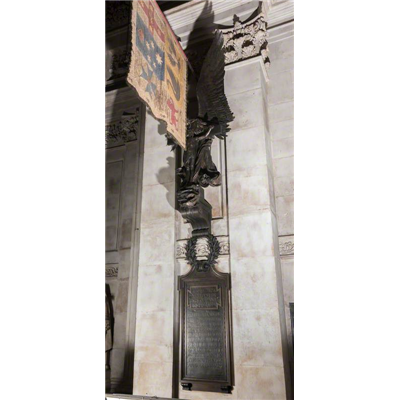
About the Lecturer: Lucinda Hawksley Lucinda Hawksley is an author, broadcaster, lecturer and award-winning travel writer, who has worked as an interviewee, consultant and presenter on TV and radio shows worldwide. She has written three biographies of female artists: Kate Perugini (née Dickens), Princess Louise and Lizzie Siddal. Her other books include, Victorian Christmas, Dickens and Travel, Letters of Great Women, Elizabeth Revealed, Dickens and Christmas, The Writer Abroad, Bitten by Witch Fever: Wallpaper and Arsenic in the Victorian Home, Charles Dickens and his Circle, Moustaches, Whiskers & Beards (Facial Hair in Art), and March, Women, March: Voices of the Women’s Movement. Lucinda’s many TV credits include Miriam’s Dickensian Christmas, a show she created with the Dickens-loving actress Miriam Margolyes, Charles Dickens with Gyles Brandreth, World’s Greatest Paintings, A Very Country Christmas, Paul O’Grady’s Great British Escape, The Project, Landscape Artist of the Year, Queen Victoria and her Tragic Family, Cathedrals of Steam – Europe’s Most Famous Train Stations, Missing Masterpieces, Queen Victoria’s Children, Mrs Dickens’s Family Christmas, Dickens and Health, Find My Past: The Staplehurst Rail Crash, Charles Dickens’s Secret Lover and Charles Dickens and the Invention of Christmas. Lucinda co-wrote and narrated The Real Sherlock, a six-part podcast series about Arthur Conan-Doyle, for Audible. She has also written and narrated, for Audible, the introductions for Our Mutual Friend and The Mystery of Edwin Drood. Her other voice-over work includes art gallery audio guides and a children’s audio guide to Stonehenge. She is a great great great granddaughter of Charles and Catherine Dickens, and a Patron of the Charles Dickens Museum in London; she is also a Patron of the De Morgan Foundation. In 2024 she became the President of the International Dickens Fellowship. Image: Monument to the Colonial Forces who Fought in the South African War (1899–1902) St Pauls Cathedral |
|
| Thursday 17 June 2027 |
| THE MAGIC OF PORTRAIT MINIATURES |
| Christina Faraday |
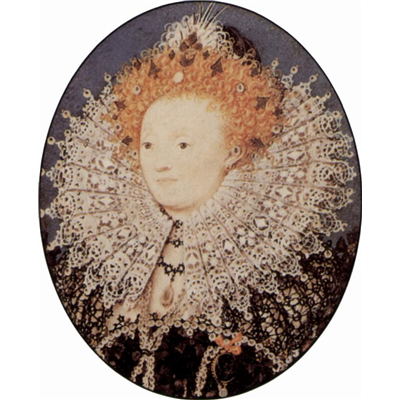 |
In this lecture, we consider the most intimate art of the Tudor age: the portrait miniature or ‘limning’. We trace the genre from its origins in illuminated books to its celebrated blossoming at the Elizabethan court. We explore the distinctive techniques and material ‘special effects’ of this peculiarly English craft, consider the lives and careers of the most famous miniaturists, and reveal how the artform inspired the most brilliant poets of the age. Portrait of Elizabeth I of England (1533-1603) Nicholas Hilliard Wikimedia public domain
About the Lecturer: Christina Faraday Dr Christina Faraday FSA FRHistS is a historian of art and ideas, specialising in Tudor and Stuart Britain and the wider 16th and 17th-century world. She is an Affiliated Lecturer in History of Art at the University of Cambridge, a Trustee of the Walpole Society for British art history, and a BBC New Generation Thinker, appearing regularly on BBC Radio 3 and in other popular media. She is the host of British Art Matters podcast, and from 2020-2025 she was a Research Fellow in History of Art at Gonville and Caius College, Cambridge. She is an experienced lecturer, teaching for the History of Art Department at the University of Cambridge, The Wallace Collection, the National Gallery, London, and for Professional and Continuing Education at Cambridge, where she is Co-Director of the MSt in History of Art and Visual Culture. |
|
| Thursday 16 September 2027 |
| Painting is Dead… Long Live Photography! |
| Aliki Braine |
 |
When the new process of photography was formally introduced and demonstrated to a joint meeting of the Académie des Science and Académie des Beaux-Arts in Paris in January 1839, the history painter Delaroche is reported to have exclaimed “from today painting is dead!”. Far from sounding the death knell of painting, photography in fact gave rise to a fascinating dialogue between both art forms. This lecture charts and outlines the birth of photography in the early nineteenth century and how its invention transformed and influenced the use, purpose and aesthetic of painting.
Lecturer: Aliki Braine Aliki studied at The Ruskin School of Fine Art, Oxford, The Slade School and The Courtauld Institute where she was awarded a distinction for her masters in 17th century painting. She has been working for The National Gallery for 25 years and teaches for Christie’s Education, The Wallace Collection and numerous private clients. Aliki is also a practicing artist who regularly exhibits her photographic work internationally and has taught at Camberwell College of Art. |
|
| Wednesday 13 October 2027 |
| CELEBRATING THE ROYAL ACADEMY OF ART |
| Pamela Campbell-Johnston |
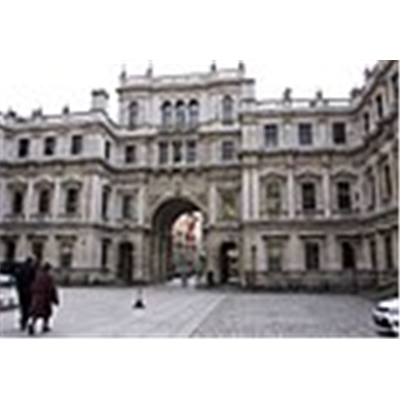 |
Britain’s oldest fine arts institution, the Royal Academy of Arts, will celebrate its 260th Anniversary in 2028. The RA has an illustrious history that spans from the mid 18th century through to the 21st-century. We contemplate its architectural past and review its various homes before its settling on the current Mayfair location in Burlington House. Expanded in time for its 250th anniversary, the 17th-century mansion on Piccadilly was connected by a contemporary 21st-century link, to the grand 19th-century former university building. This fully illustrated talk explores a selection of its ground–breaking temporary loan exhibitions and considers their impact on the art scene, both on British soil and overseas. The talk also wouldn’t be complete without a behind-the-scene look at the Summer Exhibition – held without interruption since 1769 (even during two World Wars and the covid-19 pandemic). We consider the influence of certain world-renowned Royal Academicians, exemplary artists and architects in their chosen field. The impressive roll call of RAs since it’s establishment includes household names such as Reynolds, Constable, Turner, Milllais, Munnings and, more recently, Hockney, Paolozzi, Foster, Craig-Martin, Gormley and Grayson Perry. Highlights of the Academy’s Permanent Collection will be revealed and we celebrate the appointment in 2019, of the RA’s first female President since its foundation - British abstract artist, Rebecca Salter. By charting its history and considering its place in Britain’s rich artistic heritage, we can mark this significant anniversary and consider its future with much excitement and anticipation. Anecdotal stories will also be revealed by the lecturer based on her twelve year career with the institution. Image: Creative Commons Attribution-Share Alike 2.0 Generic license. Attribution: Entrance to the Royal Academy by Anthony O'Neil
About the Lecturer: Pamela Campbell-Johnston Over 30 years of lecturing experience to undergraduates, adult groups, and to Friends and Patrons of the Royal Academy of Arts as part of the RA’s Adult Education Department. Also conducted numerous guided tours, residential trips and focused gallery talks on individual works of art. Specialises in British Domestic Architecture and Modern British Art - with a particular love for the 1920s and 1930s. A permanent career at Royal Academy of Arts for 12 years. Work experience also undertaken at Bonhams, Art Loss Register and National Trust. Now a freelance art consultant and lecturer. Recently curated a collection for the Lansdowne Club. Freeman of the Worshipful Company of Arts Scholars |
|
| Thursday 18 November 2027 |
| CATHERINE THE GREAT |
| Christopher Newlands |
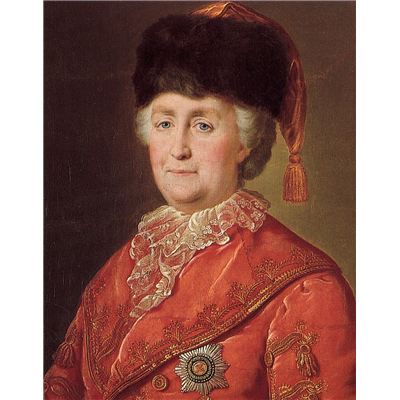 |
From relatively humble beginnings, Catherine rose to be one of the few European rulers to receive the title 'The Great'. Aside from her political ambitions and successes, as a patron of the arts, she created an unparalleled collection of paintings, ornaments and sculptures, many of which remain at the centre of The Hermitage Museum. This lecture summarises her rise to power, and her passion for acquiring things of beauty for her private collection. Image: Portrait by Mikhail Shibanov of the Empress Catherine II of Russia/Catherine the Great. 1787, St. Petersburg, Russia. The portrait is in the collection of the Hermitage Museum, St. Petersburg, Russia
About the Lecturer: Christopher Newlands Canon Chris Newlands is a retired Anglican priest, having ministered across England from Portsmouth to Durham, and from Essex to Lancashire. Before ordination, he worked for the British Council in Algeria, and after ordination was posted to Romania and Bulgaria as Embassy Chaplain and Envoy of the Anglican Communion to the Orthodox Churches of Eastern Europe. Chris is a guest lecturer on cruise ships where his lectures relate to the destinations in the Baltic, Black Sea, and Mediterranean regions. |
|
| Thursday 16 December 2027 |
| 300 YEARS OF CHRISTMAS AT COVENT GARDEN |
| Sarah Lenton |
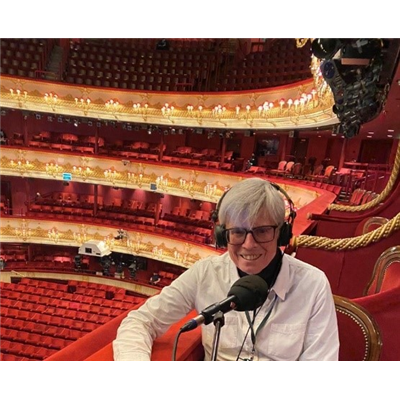 |
Christmas spectacles, slapstick, and beanstalks have been drawing crowds to Covent Garden since 1737. John Rich, the first manager of what is now the Royal Opera House, was a fine dancer, mime, and special effects man and he (and his successors) developed all the well known features of the London Christmas season. Even now principal boys, fairies, and Harlequin are alive and well on the ROH stage. This lecture pulls together the whole performing tradition and brings it up to date with the latest Christmas offerings at the Royal Opera House.
About the Lecturer: Sarah Lenton Sarah Lenton has spent her working life in the theatre: her principal employers are the Royal Opera House, English National Opera, Glyndebourne Festival Opera and Garsington Opera. She writes programme articles, radio scripts, gives lectures on the operas and ballets in the rep. and broadcasts regularly for BBC Radios 3 and 4. She is also a cartoonist. |
|